On 30 October three of the world’s great modern art museums agreed to treat their collections as something to share. It sounds like textbook cultural diplomacy – or is it a powerhouse alliance designed to keep big museums at the top?
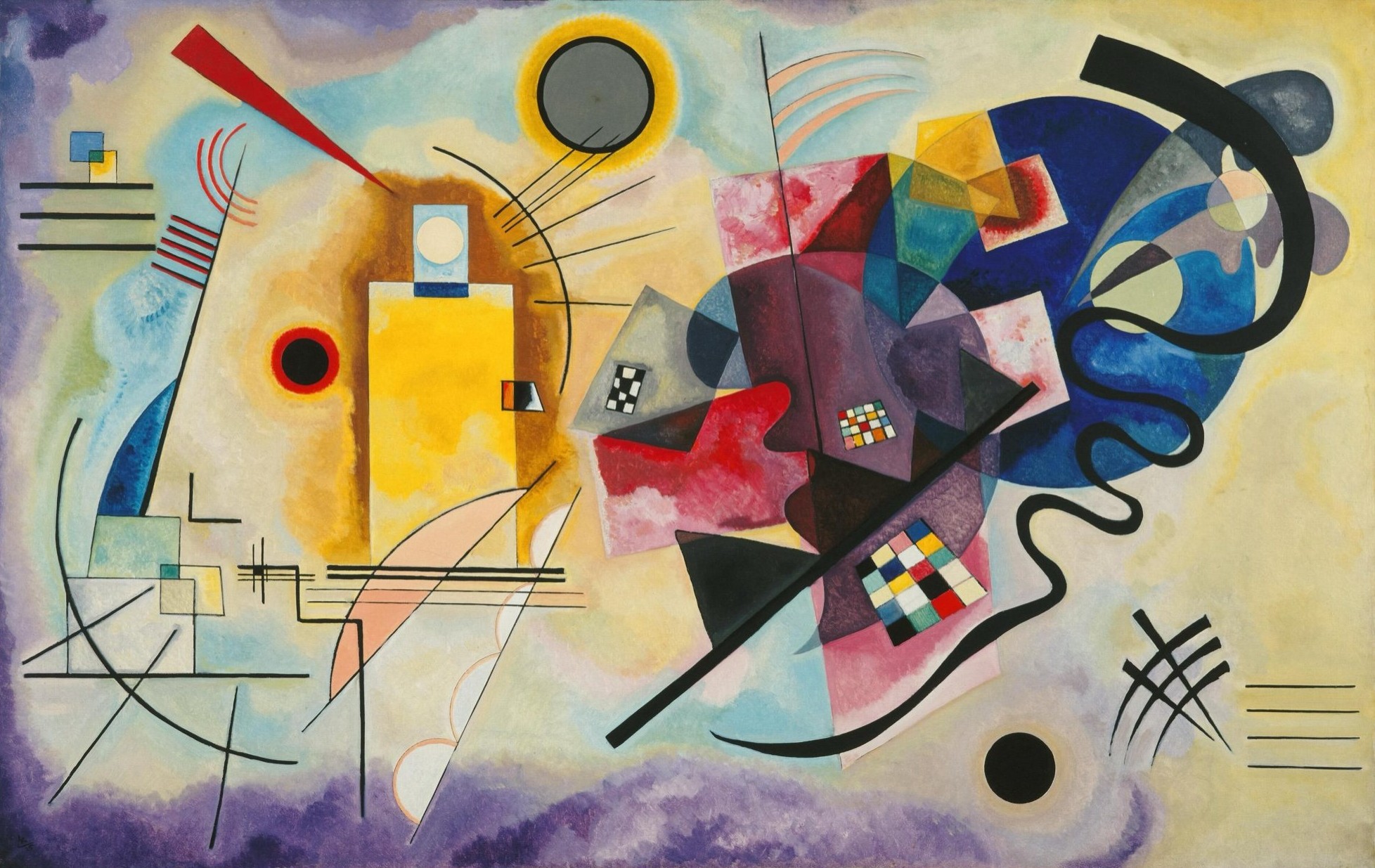
In 1925 Wassily Kandinsky (1866–1944) painted Yellow-Red-Blue. On the left a yellow rectangle stands upright like a building; on the right a dark blue circle swells against a tangle of black lines. Between them the canvas, two metres wide, seems to hold its breath.
The painting belongs to the Centre Pompidou in Paris, which – thanks to gifts from the artist’s widow, Nina Kandinsky, from 1966 and her bequest in 1981 – calls itself the reference museum for Kandinsky. Yet for the next few years you will not see it in Paris. The Pompidou’s building at Beaubourg has closed for renovation and is not due to reopen until 2030, and in the meantime its collection is on the move.
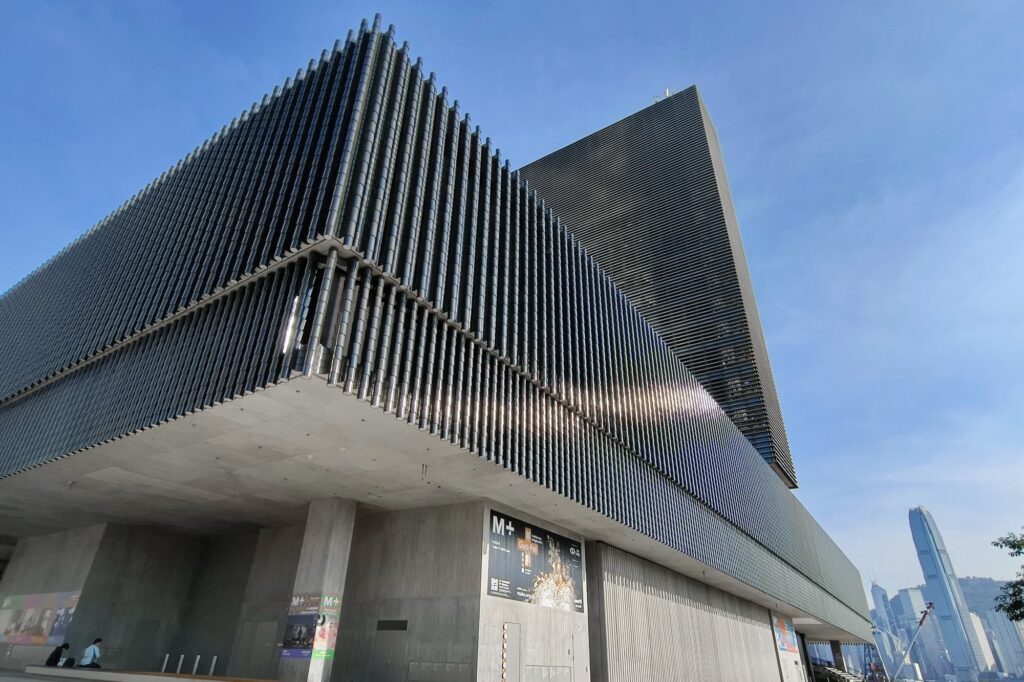
On 30 October, at M+ in Hong Kong, the Pompidou’s president Laurent Le Bon signed a framework agreement with Christophe Cherix, director of the Museum of Modern Art in New York, and Suhanya Raffel, director of M+. The three museums will share their collections, organise exhibitions together and work jointly on research and conservation – an alliance that, in Cherix’s words, makes them ‘embassies for each other’. The first project to be named is a Kandinsky exhibition, organised by the Pompidou and M+, for 2028.
Renting Out the Name
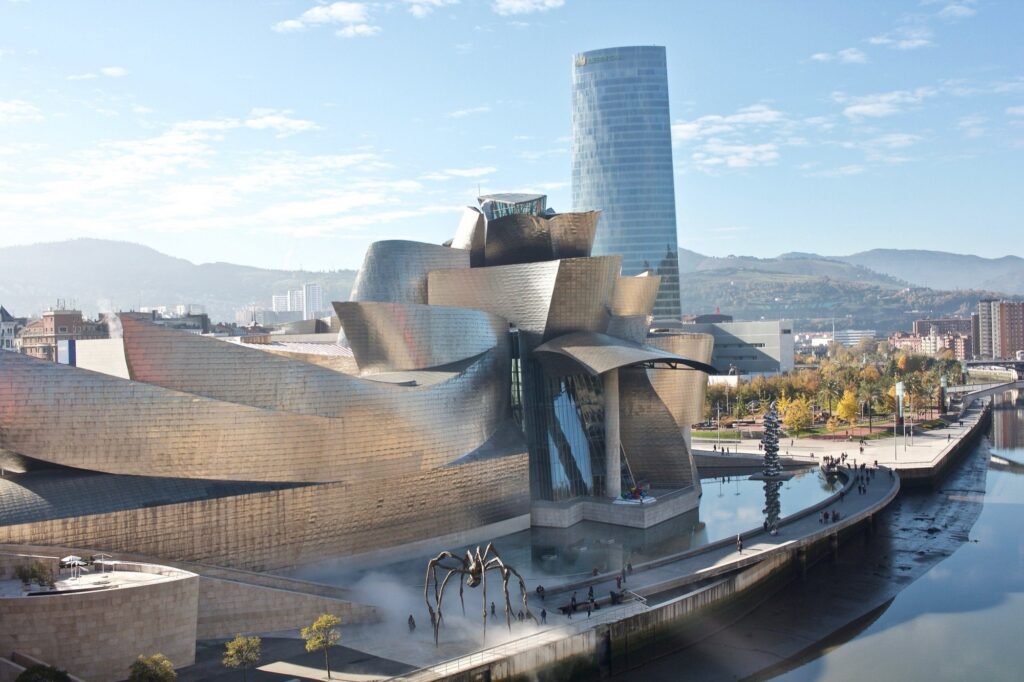
Since the late 1990s, the usual way to share a famous collection abroad has been to franchise it. The Guggenheim set the pattern in Bilbao, which opened in 1997. Its director Thomas Krens insisted that ‘all costs, operating and capital, would have to be borne by the Basque government’, and local critics called the result a ‘McGuggenheim’ that took a €20m fee up front. Ten years later France agreed to lend the Louvre’s name to Abu Dhabi for thirty years, for a reported $525m.
The Pompidou knows the model well. Its branch in Málaga opened in 2015, and the city will pay it €2.7m a year from 2025. Since 2019 it has also run a programme at the West Bund Museum in Shanghai; at the time The Art Newspaper reported, citing the French press, that the Pompidou would earn €1.4m a year for the use of its name and €2.7m a year for loans from its collection. The arrangement was renewed in 2023 and now runs to 2029.
None of this is a bad thing in itself. Franchises put great works in front of new audiences and help pay for research. Yet the relationship is commercial: one museum supplies, the other pays.
‘This cultural alliance makes our museums embassies for each other.’
Christophe Cherix, director, Museum of Modern Art
The new agreement is built differently. None of the published material mentions fees, and each museum keeps its independence and identity. What they offer one another is access – to works, to curators and to conservators. Le Bon put the reasoning plainly: ‘No single institution can encompass the entire scope of global creativity.’
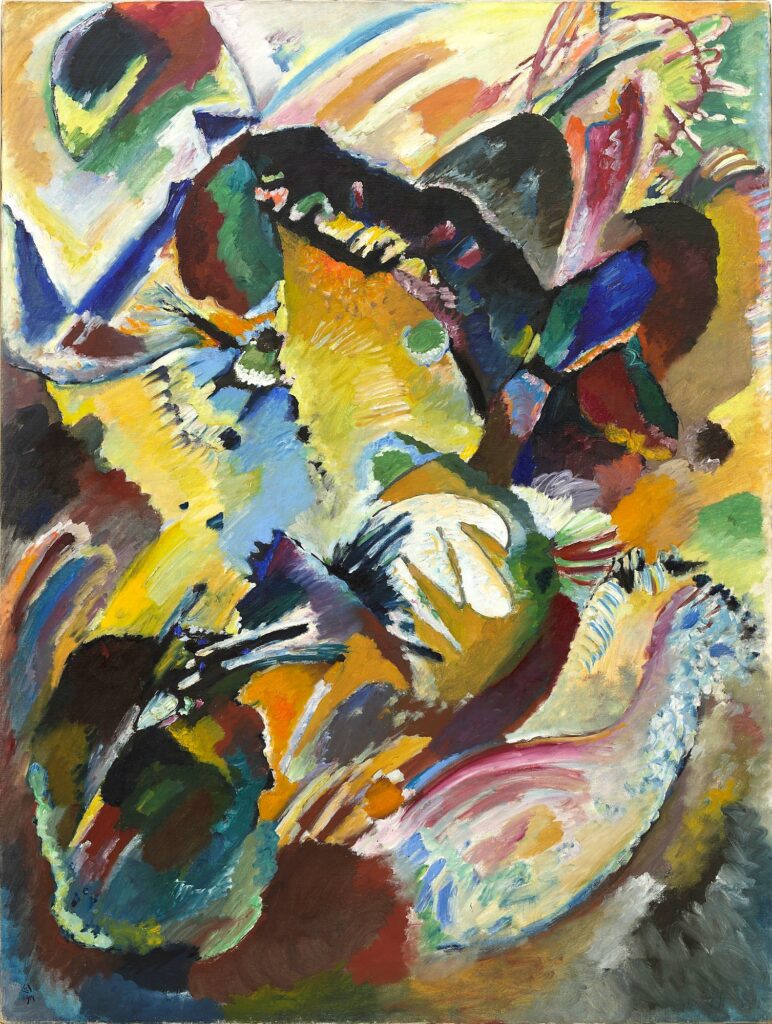
MoMA brings its own Kandinskys to the table. Panel for Edwin R. Campbell No. 2, painted in 1914, is a storm of colour with hardly a straight line in it: ochre, dark green, blue and pink pressed against patches of black. Hang it beside Yellow-Red-Blue and eleven years of an artist’s development – from storm to structure – sit on a single wall.
Le Bon singled out long-term loans as an early benefit, ‘deepening the presentation of key artists and movements’. It is the least glamorous part of the agreement, and potentially the most consequential. A blockbuster exhibition borrows a painting for three months; a long-term loan can keep it on the wall for years.
From the producer’s side, the difference is practical. Every short loan means a crate, a courier, condition reports at both ends, insurance and usually a flight. A long loan does all of that once. It is kinder to fragile works, and kinder to the carbon budget too – a subject I discussed with John Kenneth Paranada at Frieze London.
‘No single institution can encompass the entire scope of global creativity.’
Laurent Le Bon, president, Centre Pompidou
It also changes what a visitor gets. A painting seen for three months is an event; a painting that stays for years becomes part of how a city learns its art history. Between them, the three museums count about 10 million visitors a year in their buildings and 125 million online. MoMA is also reportedly considering a space for the M+ collection in New York from 2027. If that happens, the traffic will run both ways.
Learning Together
A month earlier, the Prado in Madrid and the Rijksmuseum in Amsterdam announced an alliance of a different kind, one built on research. From September 2027 a postdoctoral fellow will study the role of women across both collections in the Habsburg era, leading to an exhibition at the Rijksmuseum in 2029. As the two museums put it, ‘It is not just about showing more women artists; it is about changing the way we look at art history.’
The Prado has seen what such a partnership can do. In 2016 the Royal Museum of Fine Arts in Antwerp was closed for renovation, as the Pompidou is now. While its building was shut, it worked with the Prado on the Flemish still-life painter Clara Peeters (active c. 1607–21). The exhibition opened at the Rockox House in Antwerp that summer and moved to Madrid in October – the first exhibition the Prado had ever devoted to a woman painter.
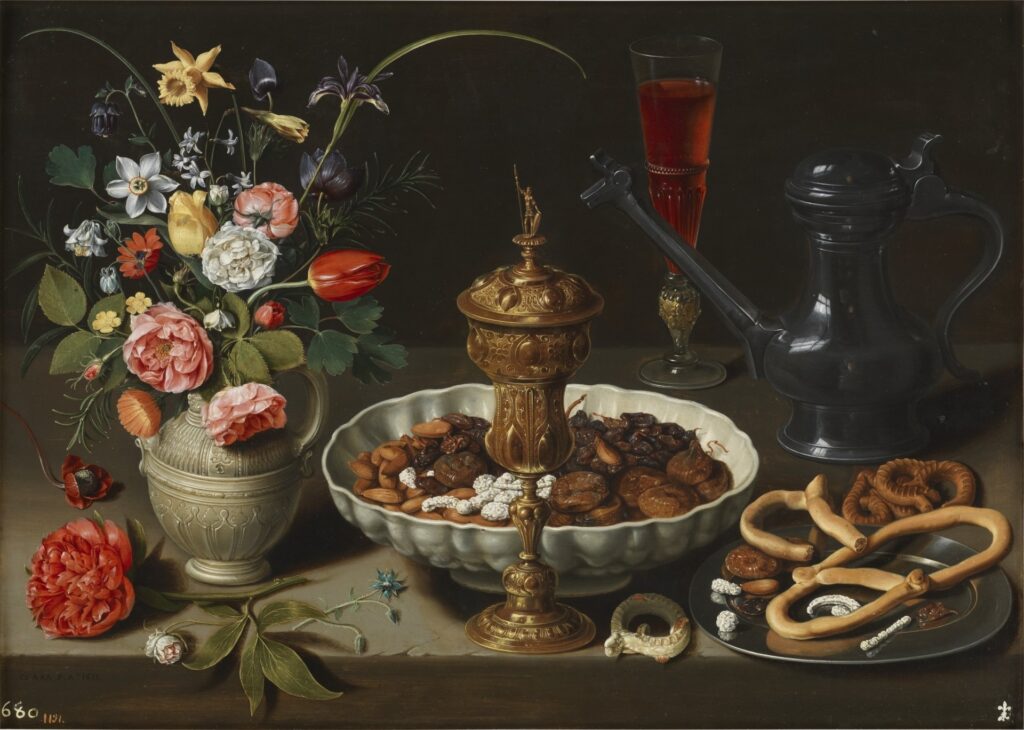
The Prado had owned paintings by Peeters for years. Its curator Alejandro Vergara has said that he only went looking for them in the stores after being asked where the museum’s women artists were. The loans for the show lasted a few months; the research has lasted much longer. Peeters is now one of the painters the Prado’s ‘El Prado en femenino’ programme has brought back into view.
‘It is not just about showing more women artists; it is about changing the way we look at art history.’
Museo del Prado and Rijksmuseum
That is the second kind of sharing, and perhaps the more lasting. Objects travel and go home again; what two museums learn together stays with both. The MoMA alliance promises research and conservation as well as loans.
Outside the Circle
Alliances raise a fair question. MoMA, the Pompidou and M+ are among the best-resourced museums in the world. A club of three can do things a regional museum cannot, and it could make it harder for smaller institutions to borrow from any of them.
The test of this agreement will be whether it stays a closed circle, or whether its research, its conservation work and in time its loans reach museums beyond it. The alliance’s first symposium, ‘What is Contemporary?’, takes place at MoMA in May 2027. It would be a good moment for that question to be asked – and answered.
Images: Wassily Kandinsky, Yellow-Red-Blue, Centre Pompidou, and Panel for Edwin R. Campbell No. 2, Museum of Modern Art, New York, both public domain, via Wikimedia Commons. M+, photo Mk2010 via Wikimedia Commons (CC BY 4.0). Guggenheim Museum Bilbao, photo Naotake Murayama via Wikimedia Commons (CC BY 2.0). Clara Peeters, Museo del Prado, Madrid, public domain; image courtesy of the Museo del Prado.
Get new Journal articles by email: join the Artworld mailing list.