
A companion to Episode 4 of Artworld Radio, the art podcast from Artworld Projects, recorded at Frieze London on 16 October 2026 with the curator John Kenneth Paranada. Prefer to listen? Hear the episode on Artworld Radio.
An art fair is, as one of the guests in this episode put it, a double bind. Thousands of people fly in to look at art that has been shipped around the world, which makes it one of the most carbon-intensive gatherings in the cultural calendar. It is also one of the few places where the whole art world meets in one room, in front of the work. So what does Frieze London look like through the eyes of someone whose job is art and climate change? Alexander Moore spent a morning finding out, walking from Wellcome Collection to The Regent’s Park with the curator John Kenneth Paranada, known to everyone as Ken.
A childhood in the field
Ken grew up in the Philippines in a family of environmental scientists: his mother studies water, his father is a geologist and forester. Their work took them all over the islands, from Manila to the Visayas and Ilocos, and he went with them, spending as much time in nature reserves identifying trees and invasive species as he did at school. He saw early on what climate change means for Southeast Asia: floods, droughts, landscapes changing within a lifetime.
A scholarship took him to Sciences Po in Paris to study the philosophy of nature with Bruno Latour, whose insistence that the climate crisis needs every kind of knowledge, not just science, still shapes his thinking. He went on to study curating in Switzerland and at Goldsmiths in London. He became the UK’s first museum curator dedicated to art and climate change, at the Sainsbury Centre, and is now a curator at Wellcome Collection.
The idea of the Anthropocene, the age in which human activity reshapes the planet, has been around for more than twenty years, so why are climate curators so new? Partly, Ken says, because denial held the conversation back for two decades. Now the scientific evidence is overwhelming, and museums can do what they do best: tell the stories that artists and objects carry. He also warns about two failings. Greenwashing means overclaiming what an institution does for the climate. “Greenhushing” is the newer habit of quietly dropping commitments when the politics turn.
Sea freight and the studio
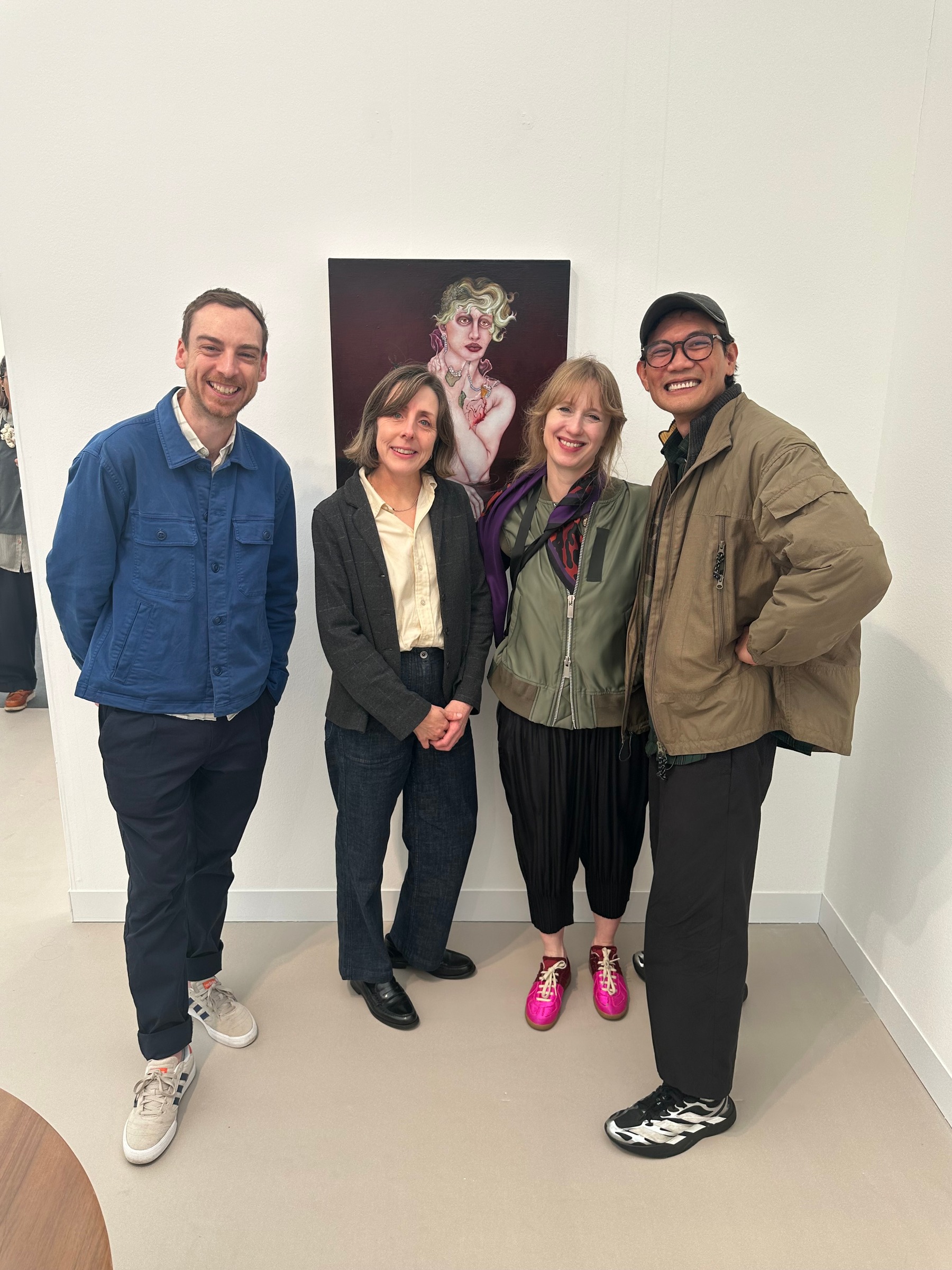
At the Hauser & Wirth stand they met Cliodhna Murphy, the gallery’s Head of Environmental Sustainability and a trustee of the Gallery Climate Coalition, and the painter Anj Smith. Murphy’s job is to turn good intentions into practical changes. The clearest example is shipping art by sea rather than air. It doesn’t suit every situation, but it can cut emissions dramatically. The catch is time: sea freight means earlier deadlines, so galleries have to help artists and their teams plan for it. She described the sculptor Cristina Iglesias working through a Madrid heatwave to make an early collection date for a New York show.
What makes the difference, Murphy says, is artists themselves speaking up for these changes. Smith did exactly that, contributing to Murphy’s white paper on sea freight. “I have never met an artist who does not care passionately about this,” she says. Her work has dealt with ecology for at least twenty years, and she is more than happy to finish early so a painting can travel by ship.
Paint itself came up too. In workshops Murphy runs for artists and studio staff, the most heated discussions have been about acrylic paint, microplastics and how to filter studio water. Smith admits that the phrase “mineral paints” fills her with dread, because colour and layering are everything in her practice. But she paints in oils and wastes very little: leave dirty turpentine overnight, she explains, and the pigment sinks, leaving clean solvent by morning. Both were careful to keep things in proportion. Artists’ materials are not the real problem; the systems built on fossil fuels are. What matters is switching off the default setting and paying attention.
Anj Smith: tenderness and opacity
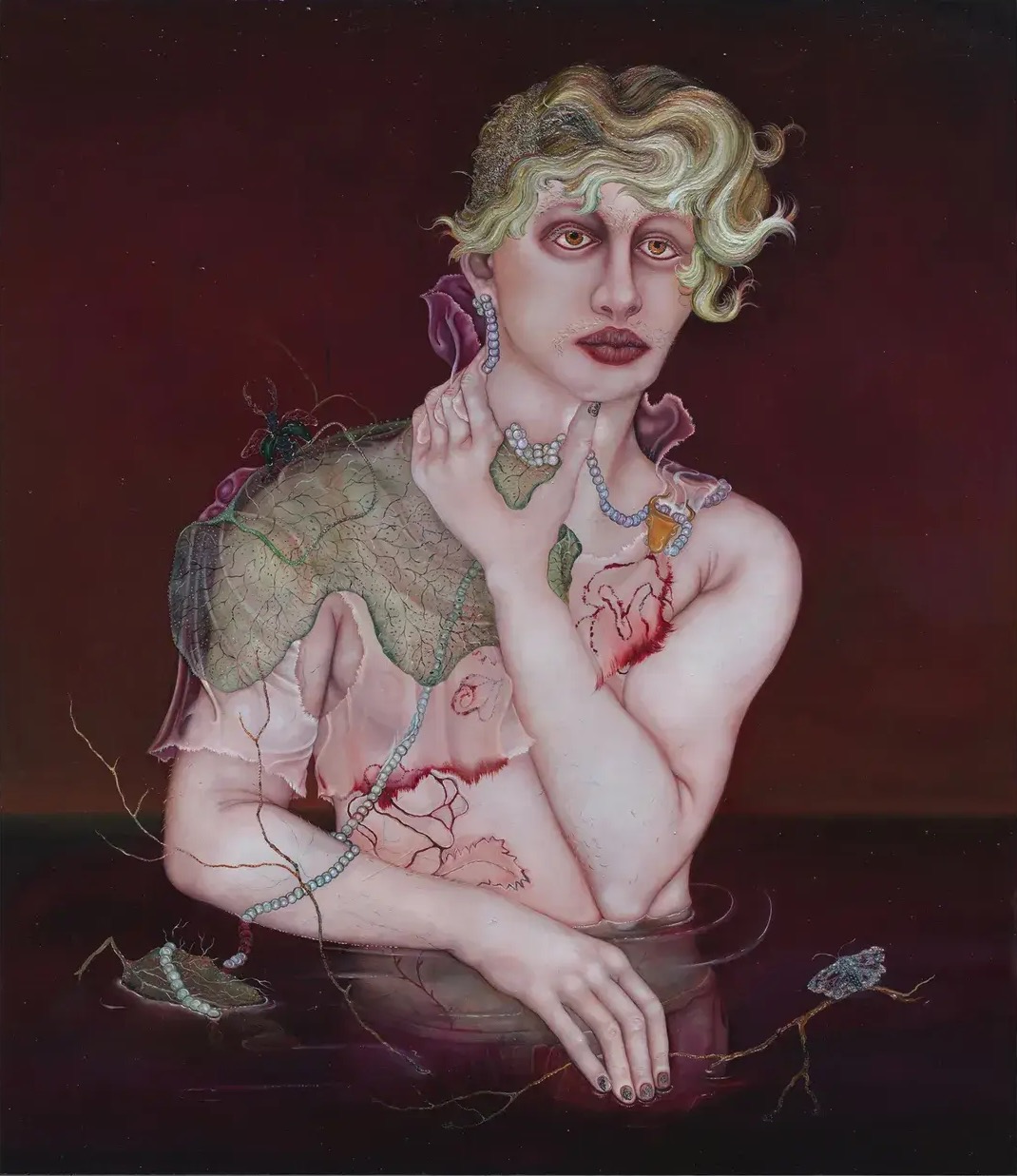
Smith is wary of explaining her paintings, because once a work leaves the studio it belongs to the people looking at it. But standing in front of her new painting, Poetics of Opacity, she offered a way in. A figure of no fixed gender, and to a large degree a self-portrait, stands chest-deep in a dark pool. The black is not emptiness: for her it holds every colour, full and velvety. A string of pearls threads through a hole in the figure’s earlobe, at once a symbol of tweedy English respectability and something openly erotic, and a quiet joke about the “pearl-clutching” conservatism around the body.
The title reflects the impossibility of pinning down a single identity. What Smith most wants people to notice is the tenderness: fingertips barely touching the surface of the water. For her that gesture rejects the old ideal of self-sufficiency in favour of something more honest, that we are all interconnected and responsible for one another.
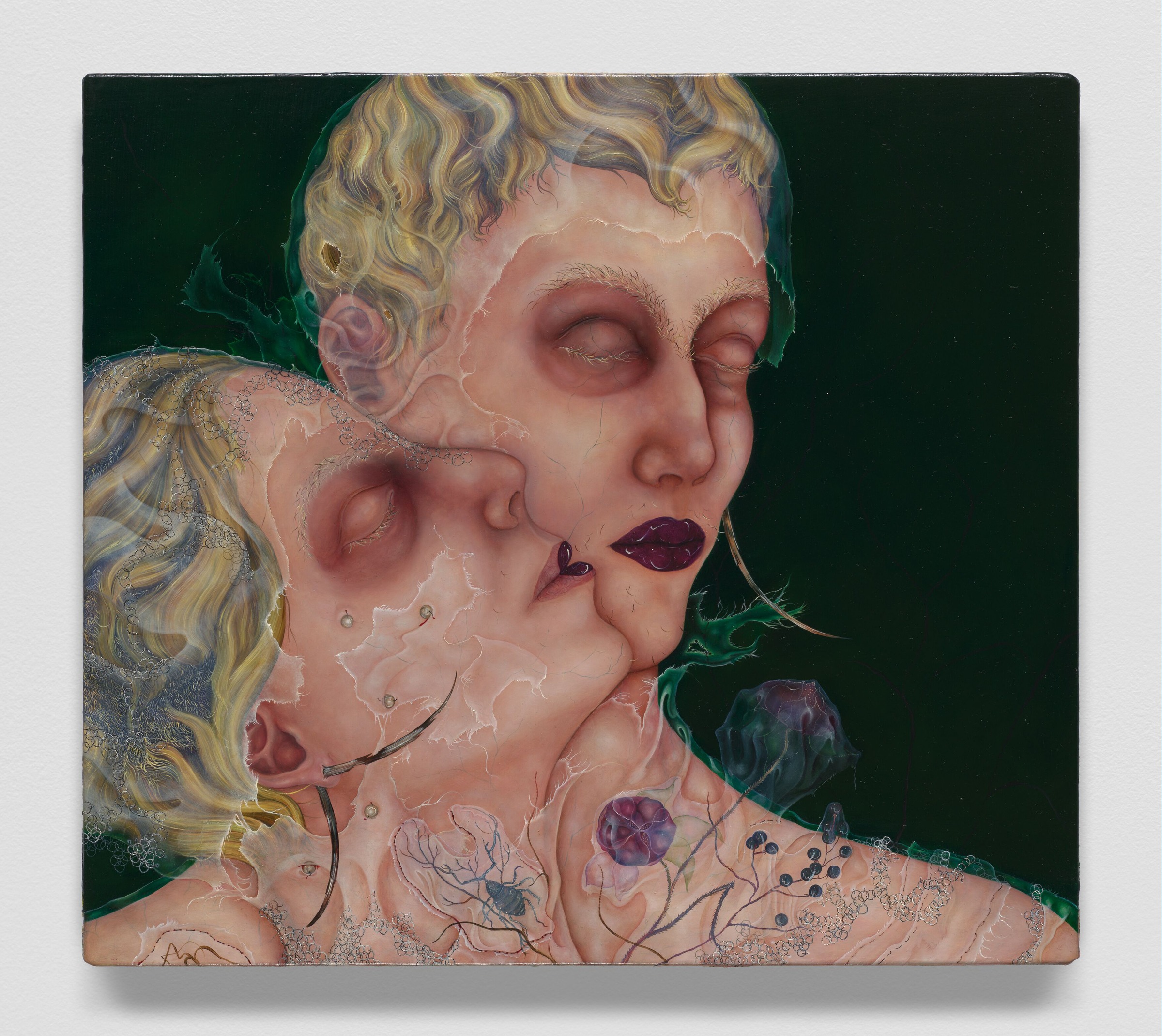
Ken has a special connection with Smith’s work. For his exhibition The Last Human Kiss, part of the Sainsbury Centre’s How Do We Find Love? season, he wanted to borrow her painting The Lover: two figures in an embrace, the kiss not shown but clearly just happened. It is in New York, and shipping it would have carried a carbon cost. So instead of borrowing it, he wrote about it. His essay “When Breath Becomes Weather: The Kiss Follows Climate”, in the book How Do We Find Love?, published by Artworld Books, threads through this whole episode. In Smith’s paintings, he says, the natural world is never a backdrop. It is part of the story, and it asks whether humans are still the only ones in control of the planet.
Around the fair
Walking on, Alexander was struck by how much figurative painting there was. It felt familiar, even comforting, more than radical. The work that challenged him most was a robot arm on a silver table by Rirkrit Tiravanija, untitled 2026 (a bitter pill), which seemed to be waiting for them to do something.
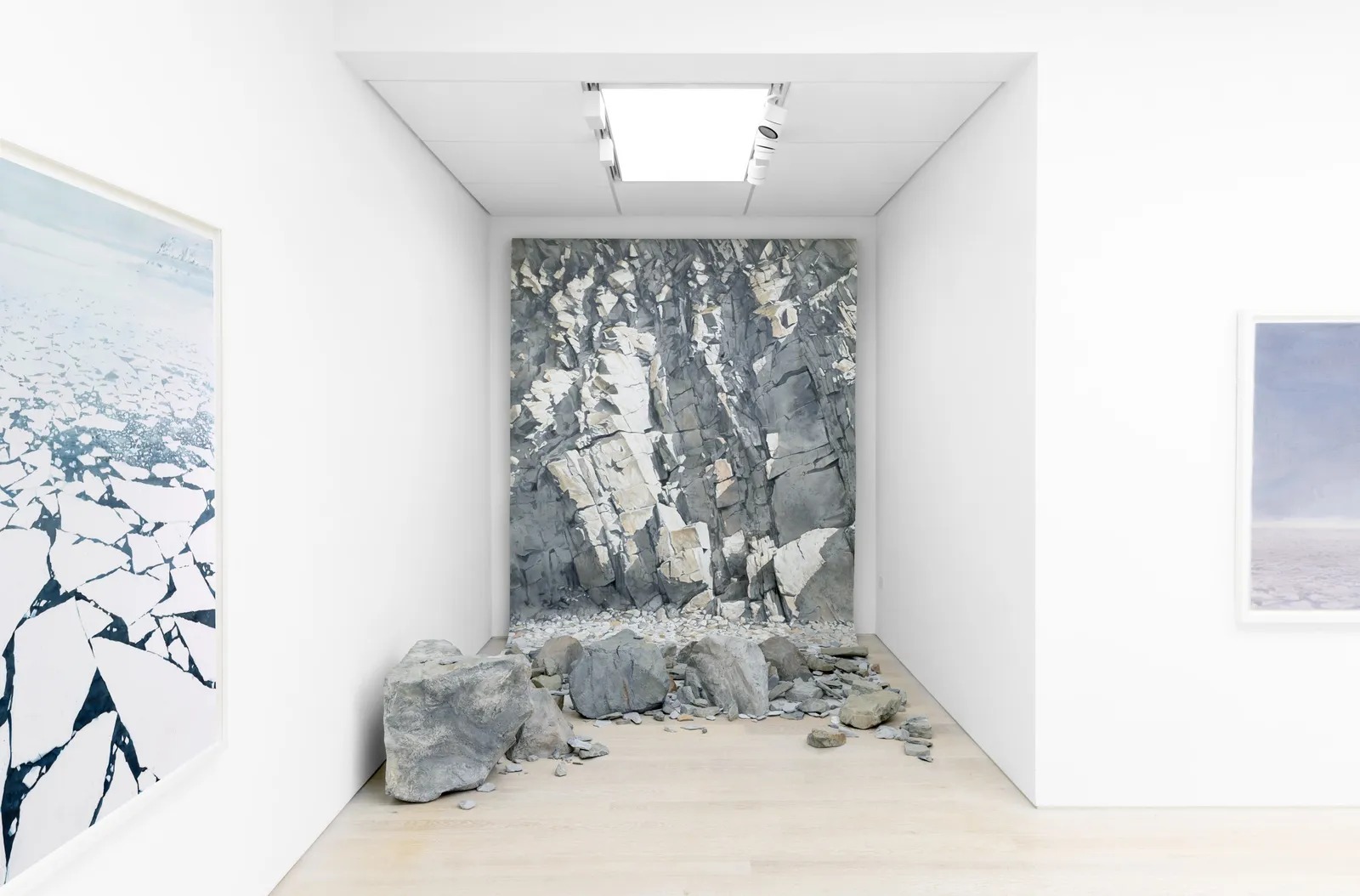
Then there was Emma Stibbon’s eroding Devon coastline, drawn with North Devon pigments, with the stones themselves laid out in front of the work. For Alexander it brought back childhood ferries to France along the south coast. For Ken it was a reminder of the communities whose homes are falling into the sea, many without the means to move: “how precious our homes are”.
Outside, they talked about people who come to fairs mainly for Instagram. Ken sees it as part of a long history: art has always made people want to be seen near it, and a Yayoi Kusama selfie signals belonging. Is climate responsibility a trend too? In a sense, he says, yes, because everyone is talking about it, and that is not a bad thing. Fairs and biennials bring the world together around a shared language, which makes them a conduit for difficult conversations.
WYRM in The Regent’s Park
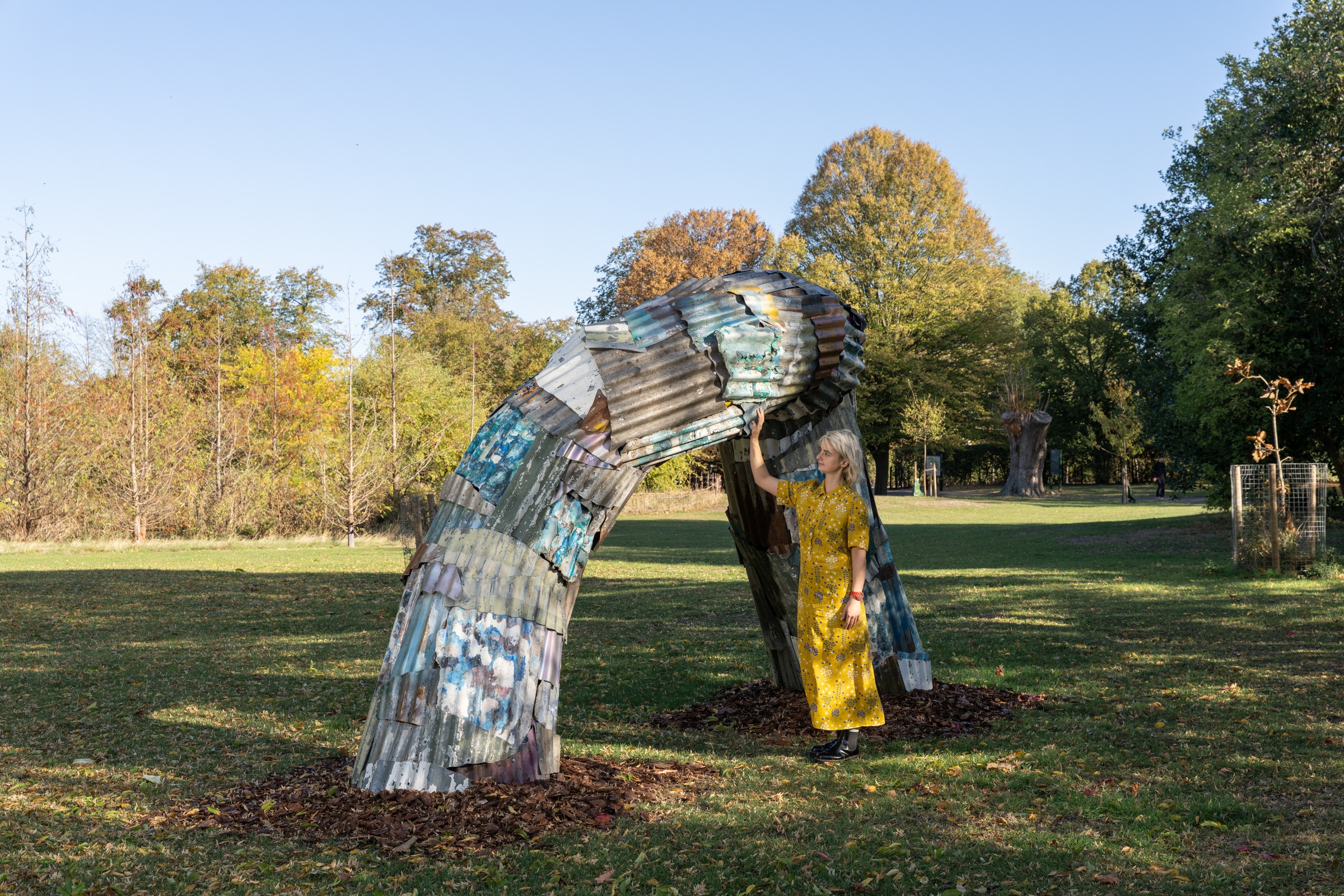
Past a Conrad Shawcross sculpture in Frieze Sculpture, they came across a huge creature of corrugated metal rising out of the grass. Their first thought was of the informal settlements on the edges of big cities, built from whatever materials are to hand. Then they met its maker, Catriona Robertson, who explained that WYRM is both a temporary shelter and a broken-column monument. Corrugated metal turns up everywhere, on building-site hoardings, farm sheds and shelters, and is recycled again and again. Robertson pulps London newspapers into concrete to cast panels that look like marble or synthetic rock. She sees them as a new “urban strata” of compressed waste, with nature growing back through the cracks.
The title, an old word for a serpent or dragon, imagines a creature digesting these materials and transforming them. Real worms are doing much the same in the park. The park’s head of biodiversity told her they are churning up post-war debris, and that worms can move around ten tonnes of soil a year. “These tiny archaeologists,” as Alexander put it, don’t get nearly enough credit.
Art as a conduit
Does Ken leave the fair hopeful? Yes. Art, he says, is one of the most powerful ways to understand how deeply humans are bound up with nature, and it can say difficult things gently. “If we destroy one ecosystem, the rest will follow.” The more these ideas are discussed in public, in engaging ways, the more people will care about protecting the planet.
Next for Ken is a spring 2027 season on the oceans at Wellcome Collection, with artists from the Pacific. First comes The Last Human Kiss, which opens at the Sainsbury Centre on 13 November 2026 as part of How Do We Find Love?, alongside the new book from Artworld Books. In a century when loneliness has become a public health problem, Ken says, the season returns to something fundamental: loving someone, and being loved in return.
Hear the full conversation in Episode 4 of Artworld Radio: Spotify, Apple Podcasts or YouTube, or browse all Artworld Radio episodes. Pre-order How Do We Find Love? from Artworld Books.