
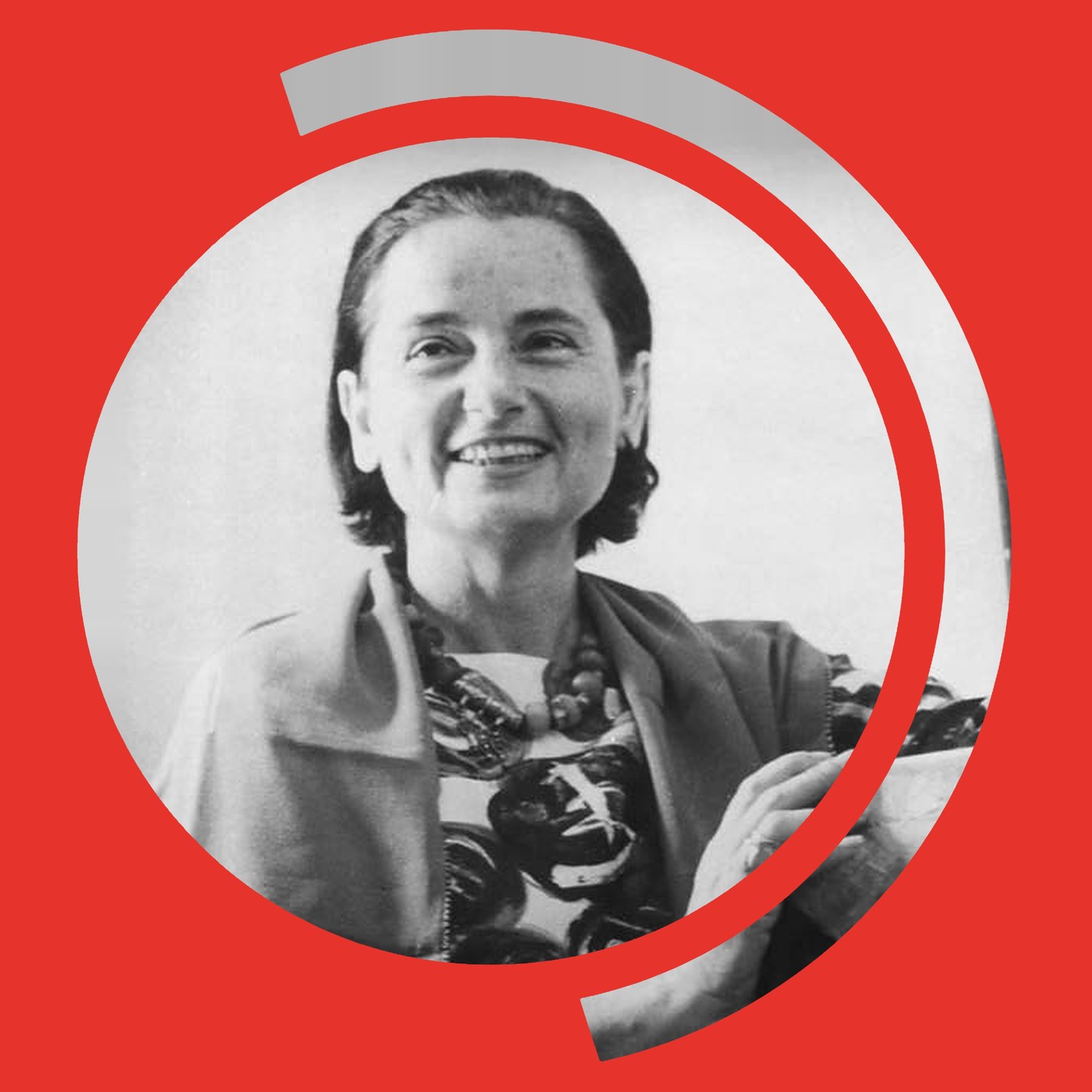
A companion to Episode 3 of Artworld Radio, the art podcast from Artworld Projects, in which Alexander Moore talks to Matthew Perlman about his grandmother, the painter Suzanne Perlman. Prefer to listen? Hear the episode on Artworld Radio.
Every Friday, Matthew Perlman drove his grandmother the same way to family dinner. And almost every Friday she would stop him to point out the trees, or the light on a view, as though she had never seen them before. “I would say, Grandma, this is the same journey we take every week,” he remembers. Only later did he understand that she had trained herself to look like that. Seeing everything as if for the first time was the whole of her method, and it carried a self-taught painter from Budapest to the Caribbean, New York, Salzburg and London over the course of a ninety-seven-year life.
A childhood sorting postcards
Suzanne Perlman was born in Budapest in 1922 into a family that ran an art and antiques shop. When a neighbour left the shop a huge collection of museum postcards, the job of sorting them fell to Suzanne, then eight or nine, and her older brother. They turned it into a game of swaps: do you have a Matisse? A Velázquez? A Goya? By the time she was a teenager she could place painters and movements with ease, and years later, standing in front of the originals, she said it felt like meeting old friends.
Childhood ended early. Her father died when she was twelve or thirteen, and while her brother stayed at school she left to help her mother run the shop. At around seventeen she met her future husband, a German-born Dutch citizen, and in 1939 she moved to the Netherlands to start a new life with him.
The last boat out of Europe
The story of how the couple escaped is told in full in the episode, and it is worth hearing in Matthew’s own words. In short: a contact in the French government, with whom her husband had negotiated a grain contract, summoned them to Paris at short notice and told them to bring very little. They arrived days before Germany invaded the Netherlands in May 1940, and everything they had left behind was lost. With the Dutch embassy’s help they found passage to one of the Dutch colonies, fought their way onto a train to Bordeaux, and boarded what Matthew describes as the last boat to leave Europe on the day the French armistice was signed. After a short stay in the Dominican Republic, they settled in Curaçao.
Learning to paint on Curaçao
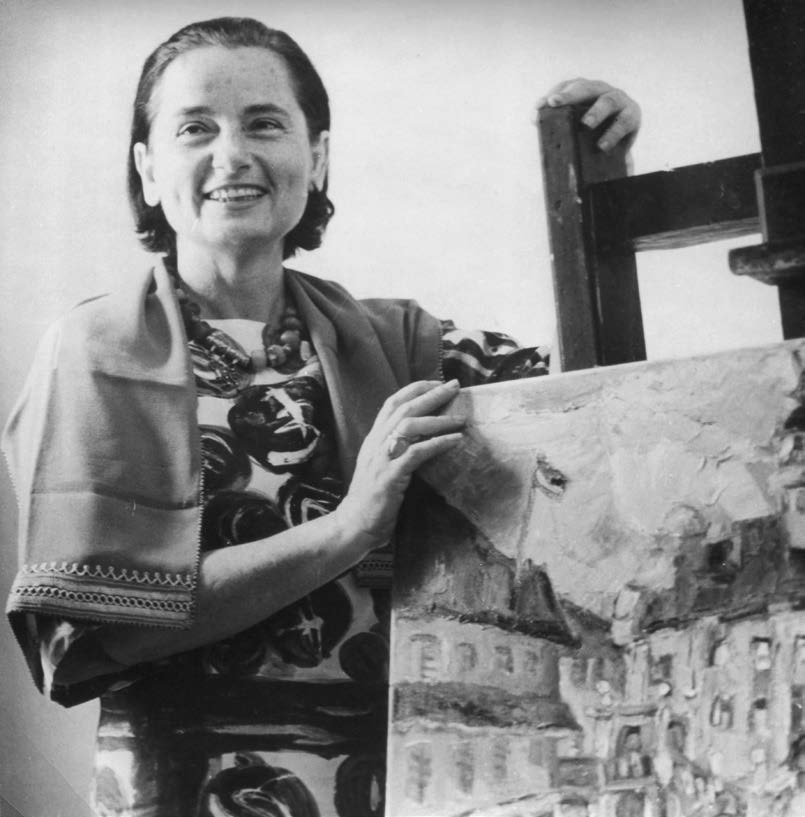
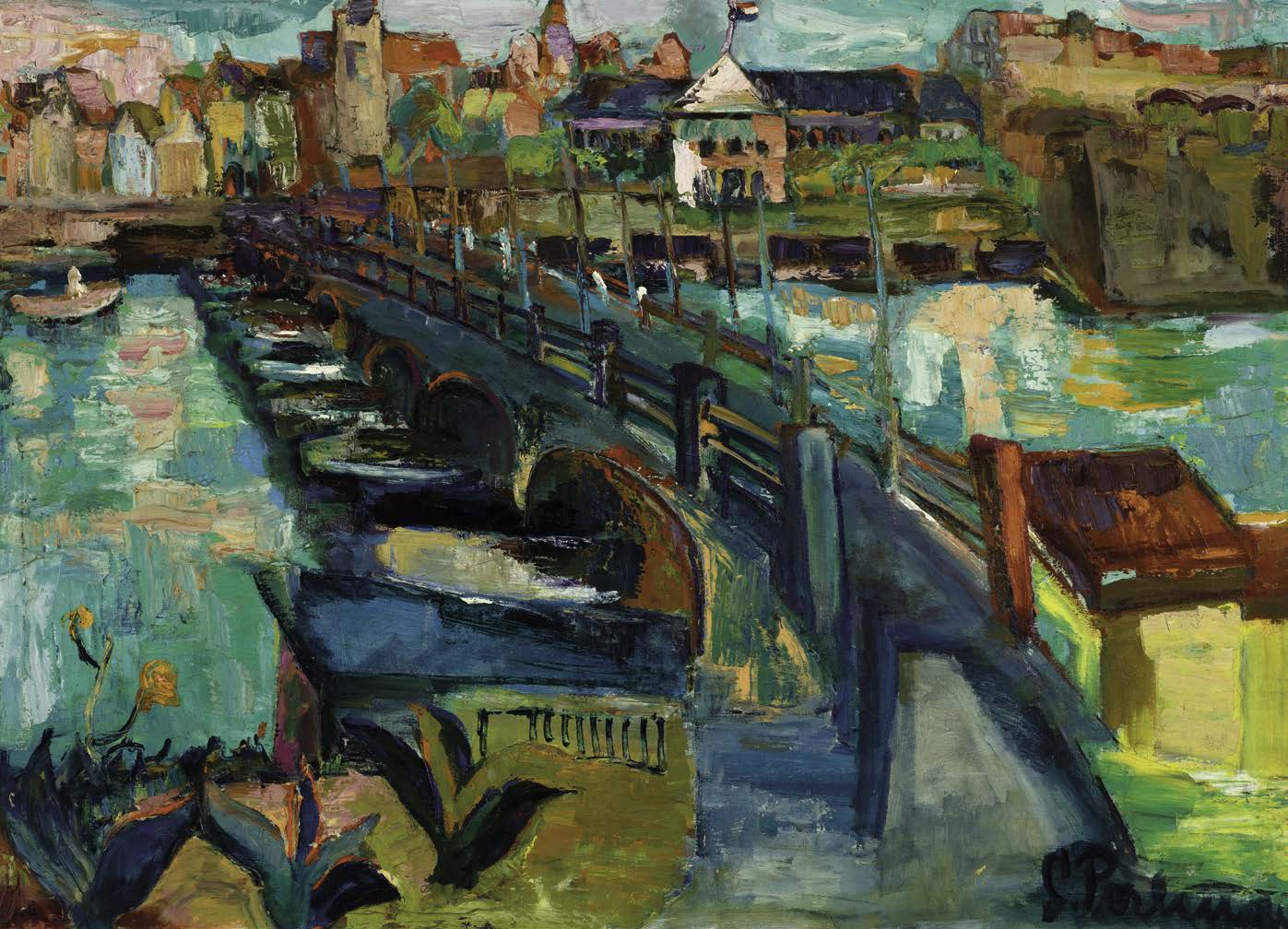
Curaçao, a small island off the coast of Venezuela, is where Perlman began to paint seriously. New to the island and often alone, she walked it with sketchbooks, brushes and paints, and later drove out in her own car to set up a small canvas wherever something caught her. She would slip out at five in the morning to paint a view before anyone else was awake, and she said it felt as if the view was there just for her. When she and her husband opened an antiques shop on the island, Fanny’s Shop, she painted in a studio in its attic.
Landscape came first, but people were what really held her. The moment she knew painting could speak for her came early. She painted a blind woman weaving a basket, struck by how the work lived in the woman’s hands, and left the canvas outside to dry. The next morning a gardener passing by stopped in front of it. He knew the woman. He had to have the painting, and offered to work for nothing in exchange. Perlman gave it to him, and, as Matthew puts it, “that was the moment she realised she could communicate through her art.” Decades later, a buyer at one of her exhibitions noticed that a large and a small canvas carried the same price. Rather than ask for a discount, he insisted the larger one was underpriced: it had too much weight to sell so cheaply.
She was so unwaveringly herself that it didn’t matter who she was talking to. She would have been the same with them.
Matthew Perlman
That weight, a kind of humanity that survives even her loosest brushwork, runs through all of her portraits. She would stop strangers in the street and bring them up to her studio, or ask Matthew to fetch someone she had spotted so she could photograph them. On Curaçao she painted the island’s own culture as a curious and respectful observer, including scenes of the tambú, the island’s drum music and dance, at a time when it was still banned. Her sitters let her in, Matthew believes, because she was charming, talkative and genuinely interested in their lives, and because, in time, she learned their language.
Daily Problems
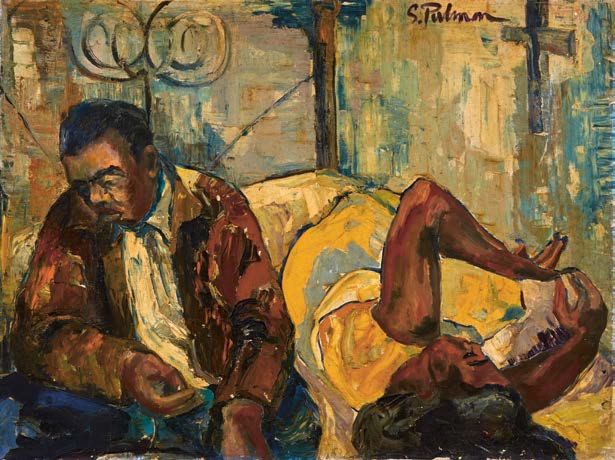
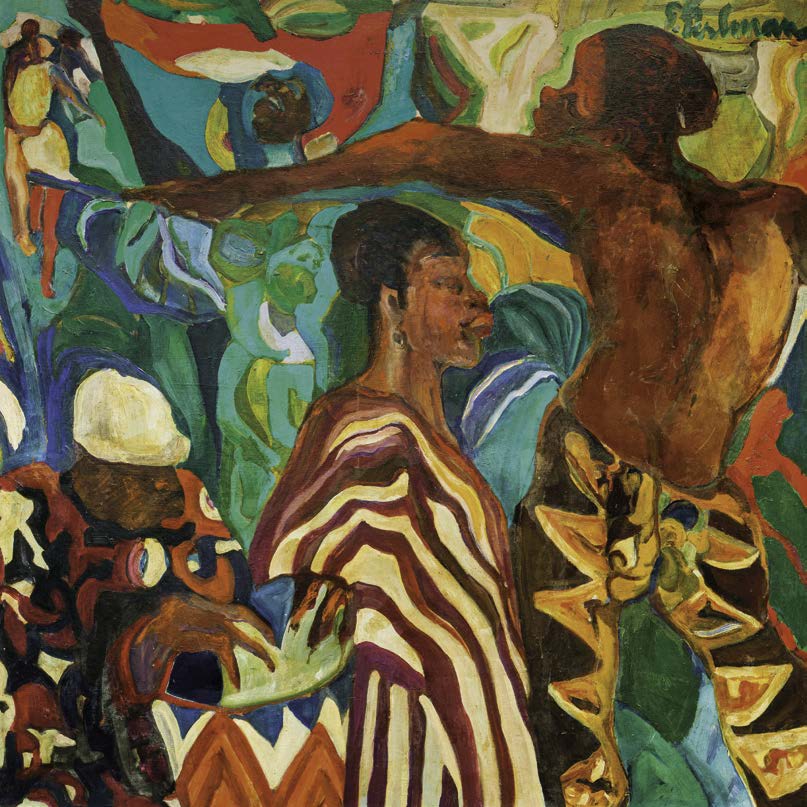
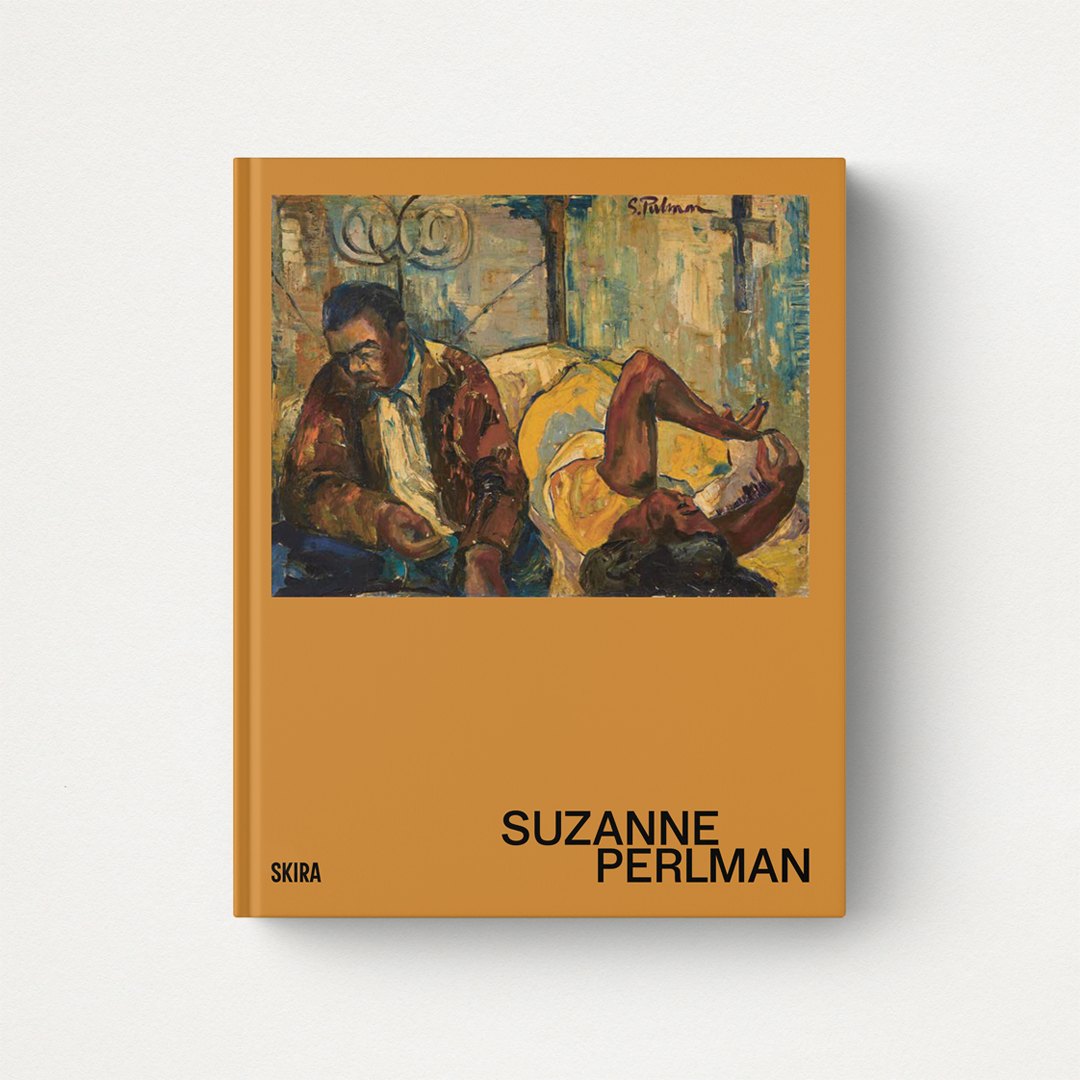
Daily Problems, the painting chosen for the cover of the new monograph, gathers much of this into one canvas. A man sits on the edge of a bed, hunched and half in shadow. Beside him a woman in a golden dress stretches away towards a cross on the wall, catching the light. The figures are held by heavy dark outlines and you can see every stroke. They are close together, yet it is hard to say what passes between them: tenderness, tension, or just a quiet moment at the end of the day. Matthew hears something spiritual in it more than something religious. For Alexander, it is a painting that could only have come from Curaçao, made by someone who had become an insider in the community she was painting.
New York, Salzburg and “electric” lines
Painting, for Perlman, was always more a spiritual pursuit than a commercial one, and she arranged her life around it in ways that were unusual for a mother in the mid-twentieth century. Her three children went to boarding school, she ran the shop, and whatever she earned went on travelling to paint. In the early 1950s that meant New York, where she studied at the Art Students League at the height of Abstract Expressionism. There are fully abstract works by her from as early as 1950. She watched the movement closely, almost certainly at shows such as those at Betty Parsons Gallery, but always from the outside: “She wasn’t at the Cedar drinking with all of these artists.”
In 1961 she went to Salzburg for Oskar Kokoschka’s summer School of Seeing. Students were called into his office one by one to be told whether they could stay. Perlman went in with one foot still in the doorway, ready to run. Kokoschka looked at her work and told her, “Your lines are electric. You can stay.” She returned in 1963 for a longer period, and painted him. The school taught a way of looking rather than a technique, and in the years that followed her work changed. From the mid-1960s come large paintings that fuse the abstract and the figurative, bringing Curaçao and New York together on one canvas.
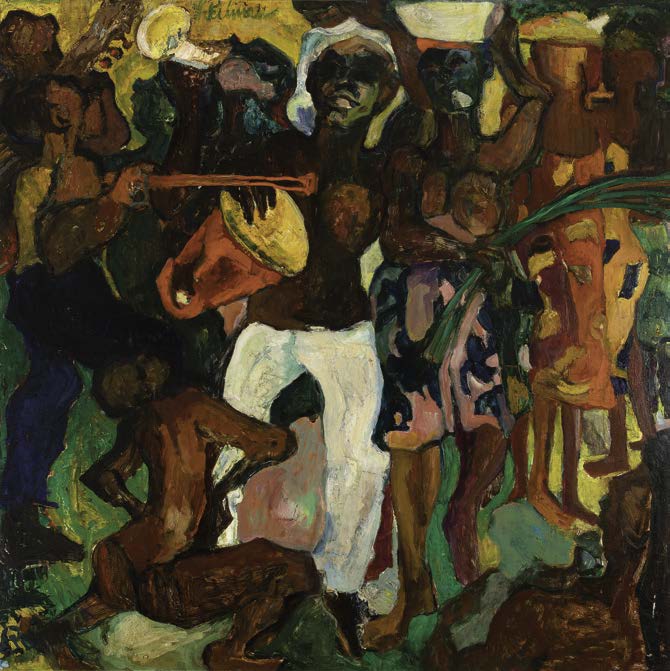
Recognition came in pieces. Her first exhibition was at the Curaçao Museum in 1961, and the same year she was selected for an exhibition in the Netherlands alongside leading Dutch artists. A curator from Amsterdam’s Stedelijk Museum saw her work on a visit to the island, which led to a solo show in the Netherlands in 1970. She showed in London in 1967, in Puerto Rico and Mexico City, and at the Salon d’Été in Paris, where one of her paintings won an award. But she was a Caribbean-based painter in an art world centred on New York, Paris and London, and her reputation stayed largely local. “Look at her work from New York, from Curaçao and from London,” Matthew says, “and you would think it’s three different artists. That says everything about her.”
Memory and the Holocaust Memorial
The war rarely appears directly in her paintings of everyday life, though Matthew believes the depth in them comes from what she lived through. Even on Curaçao it reached her: the island’s oil refinery, which supplied the Allies, came under German attack. Where it does surface is in her religious and Jewish scenes, which for her were about passing traditions from one generation to the next, and above all in Holocaust Memorial of 1987.
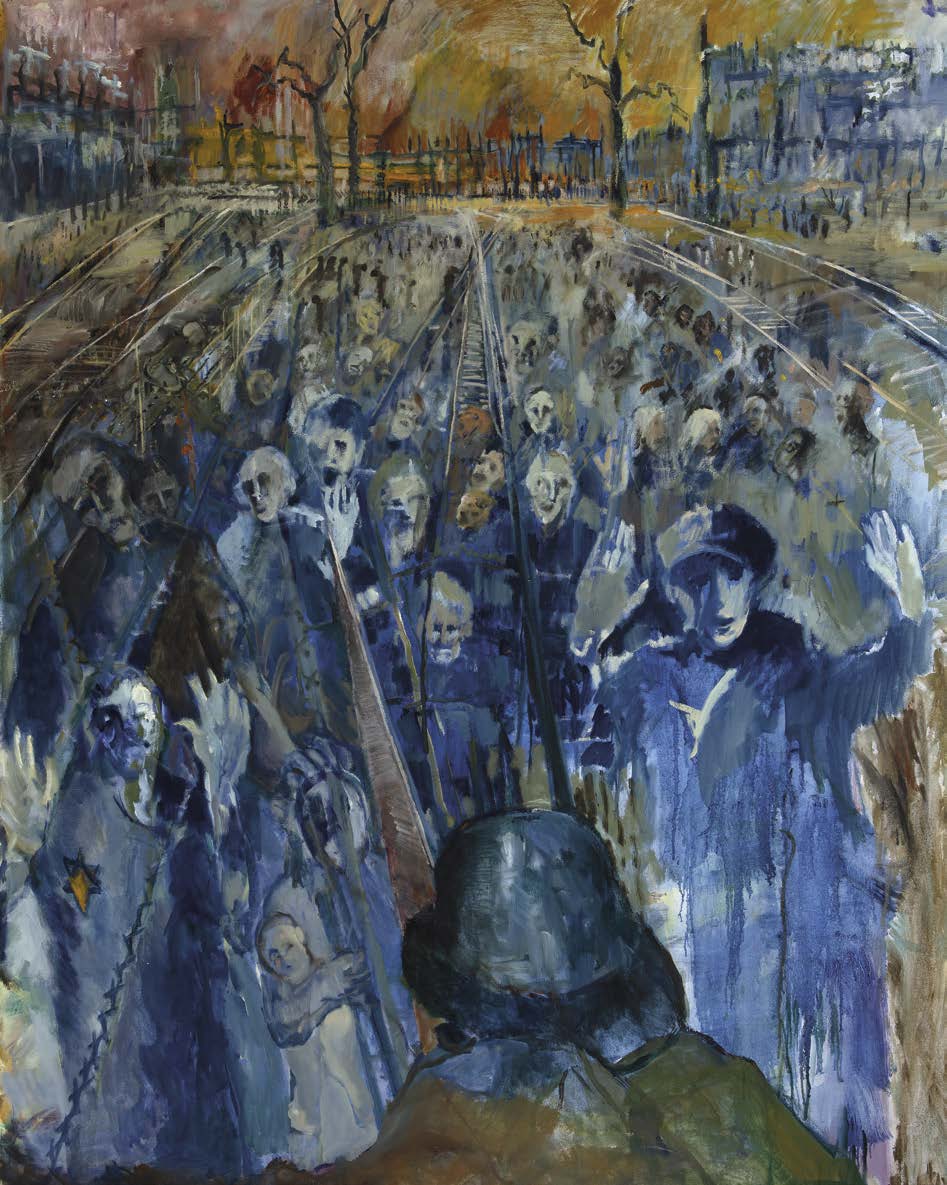
The painting began with a famous wartime photograph of a young boy in a cap. More than forty years later she was ready to return to it, perhaps, Matthew suggests, because only then did she have the stability to do so. It is a ghostly crowd that draws on every way she knew how to paint, from classical portraiture to expressionist faces to abstract line. As the figures recede their faces dissolve, but at the centre a small elderly woman holds the eye, her face so clearly drawn that from a distance it looks almost photographic. “No one was exempt,” Matthew says. “When I see an old woman, I naturally think of my grandmother.”
London, and a defiant self-portrait
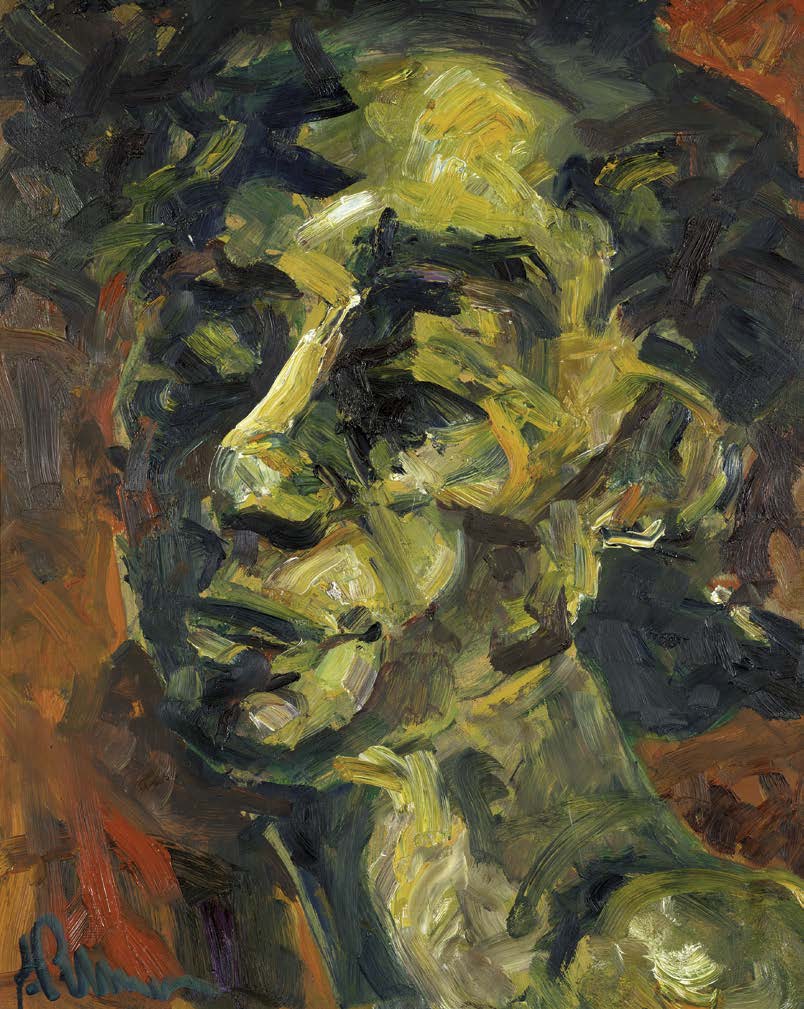
Her brother had settled in London, and after her husband died in the 1980s she moved there too. As on Curaçao, she picked up her brushes and started painting the city with the eyes of a newcomer amazed by all of it. In 2002, at around eighty, she painted a double self-portrait, herself and her reflection in a mirror, in sharp greens and yellows with a fiery red behind her head. The brushwork is as loose as anything she made, and the colours unlike the rest of her work. Matthew sees defiance in it: chin raised, full of dignity, and perhaps more pain and introspection than she usually let show.
Two co-founders, one of them 94
Matthew always knew his grandmother was an artist. What he had not grasped was how much she had made, until he went to help her move things around the house where her paintings were stored and found a treasure trove. About twelve years ago he started work on bringing it to light, with no background in the art world and learning as he went. For the first four or five years they did it together. He compares it to “setting up a business with a 94-year-old”, two co-founders trying to make it work, and he loved what it gave her: a reason to wake up each morning and ask what they were going to do today.
Since her death the project has been about understanding the full picture, from finding unknown paintings to working through the archive, and getting the work in front of as many people as possible. An exhibition Matthew curated at the Dutch Centre in London was a Financial Times Critics’ Choice. Works have since entered the collections of the Rijksmuseum and the Stedelijk Museum, and this year Singer Laren in the Netherlands introduced her to the Dutch public with a major exhibition. Behind every “unknown” artist who suddenly appears in a museum, he has learned, is someone doing years of legwork: “There is going to be no discovery without it.”
Hear the full conversation in Episode 3 of Artworld Radio: Spotify, Apple Podcasts or YouTube, or browse all Artworld Radio episodes.
Images courtesy of the Suzanne Perlman estate. [CHECK credit line with Matthew]