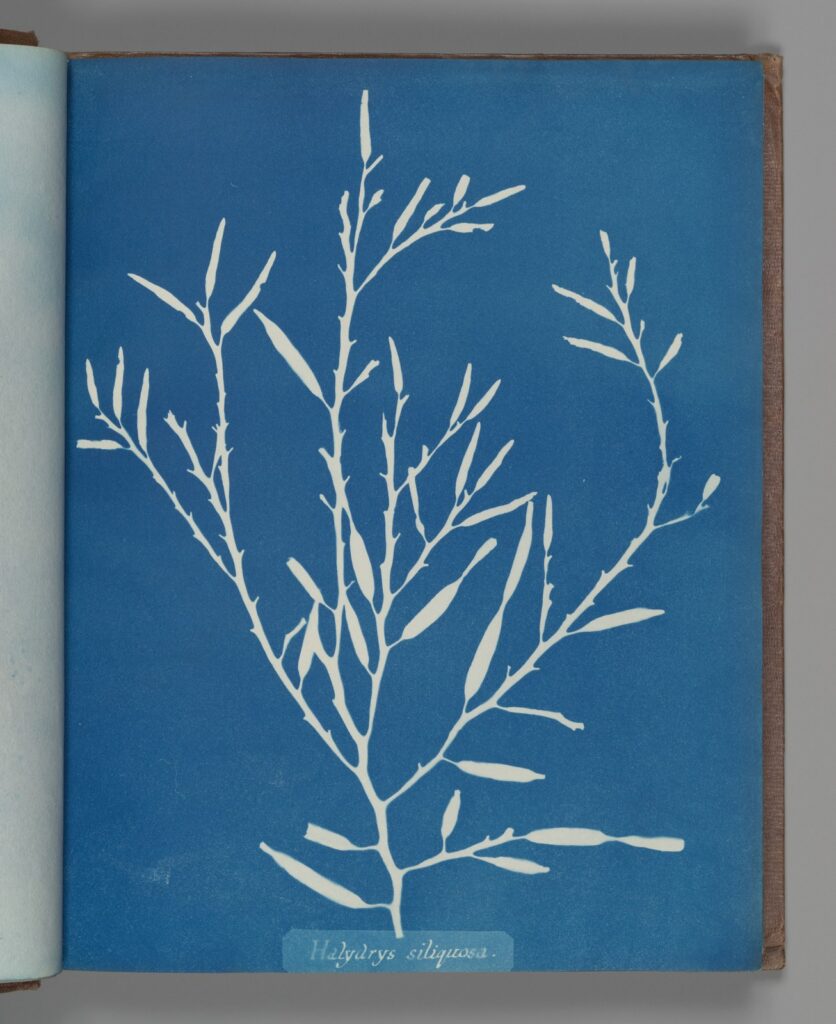
The first ever photobook was painstakingly crafted by hand. In October 1843 the botanist Anna Atkins (1799–1871) issued the first part of Photographs of British Algae: Cyanotype Impressions, which she printed and published herself in instalments over the next ten years. Even the lettering is photographic – her own handwriting, printed in cyanotype on the same blue ground as the seaweed.
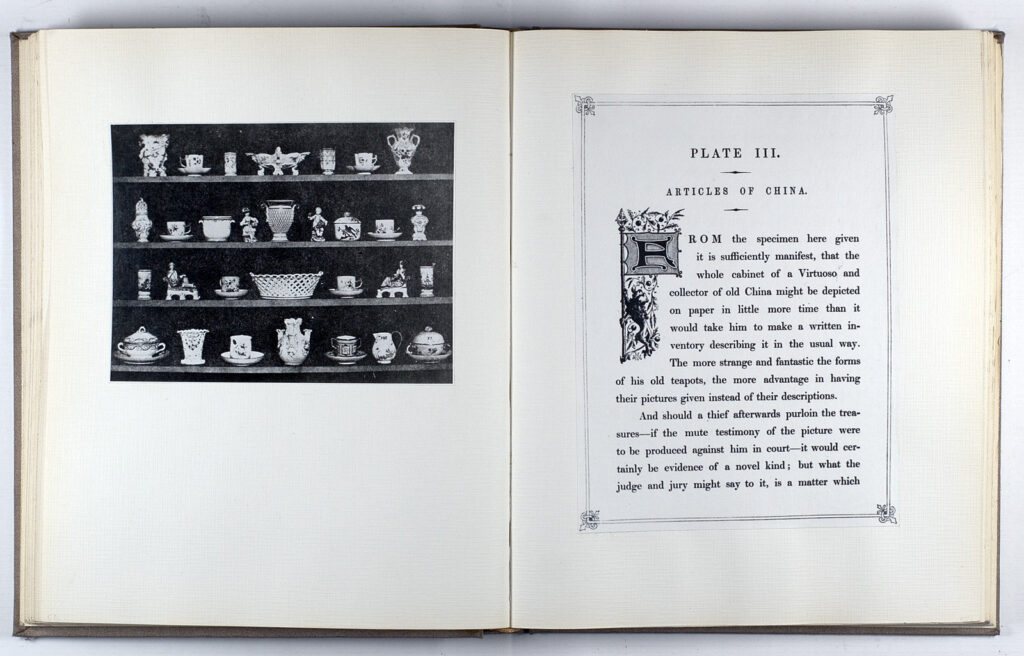
A year later William Henry Fox Talbot (1800–1877) began to issue The Pencil of Nature through the London publisher Longman, the first book illustrated with photographs to be sold commercially. Each of its 24 prints had to be pasted in by hand, and when sales proved poor Talbot stopped after six parts.
Atkins worked alone and for a few readers, while Talbot needed buyers and could not find enough of them. Photobook publishing has moved between those two ways of working ever since, and it still does in photography’s bicentenary year.
Hot Off the Press
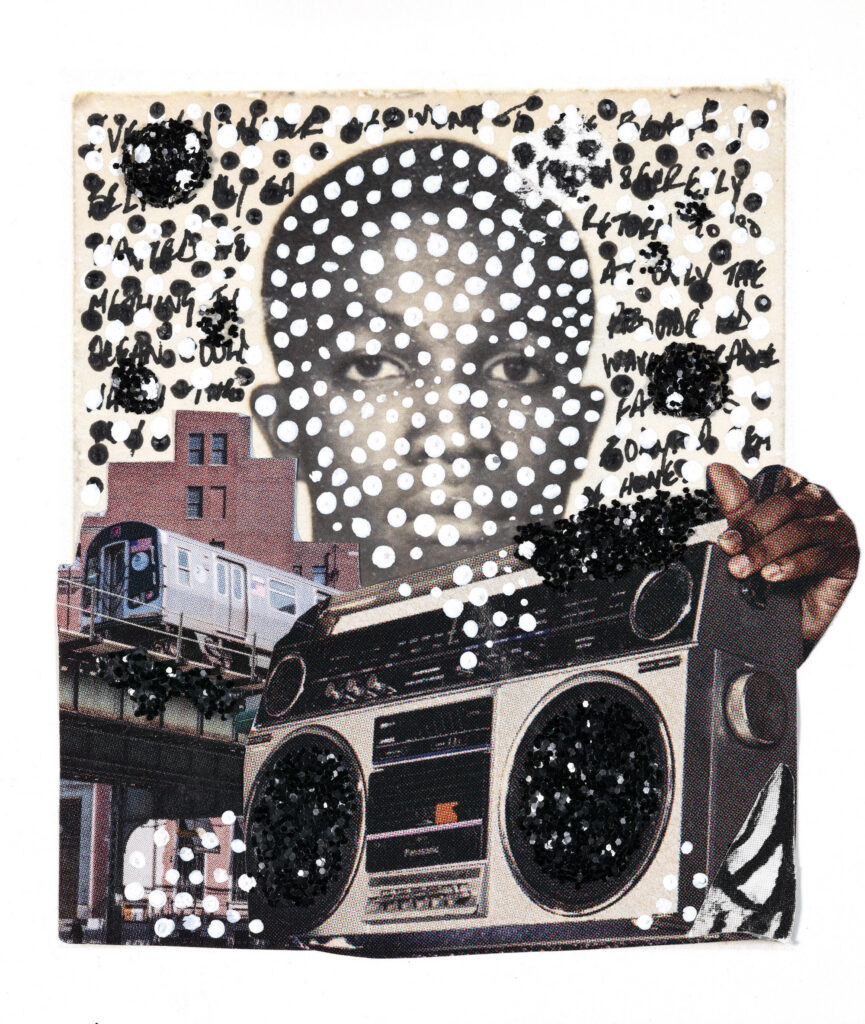
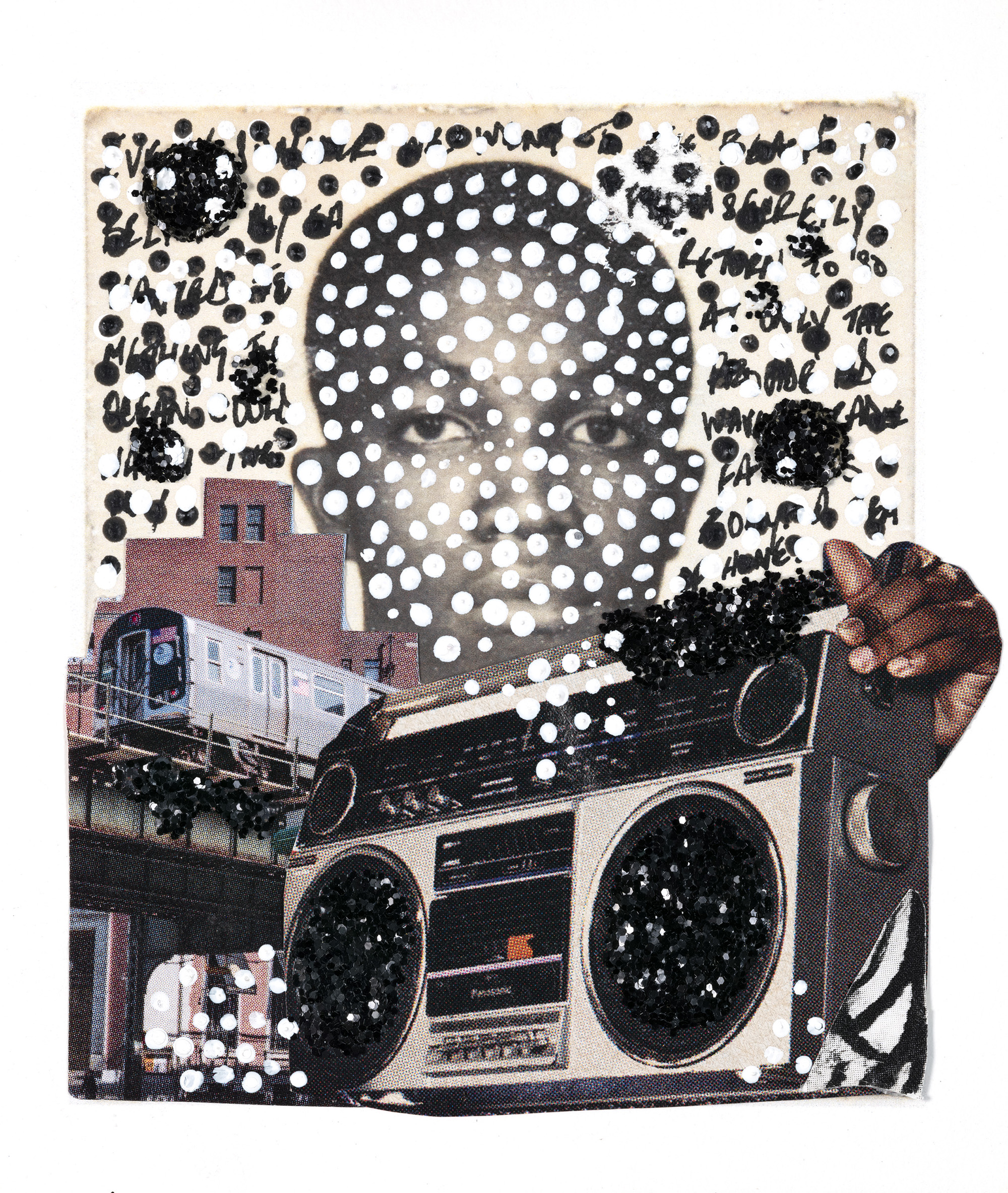
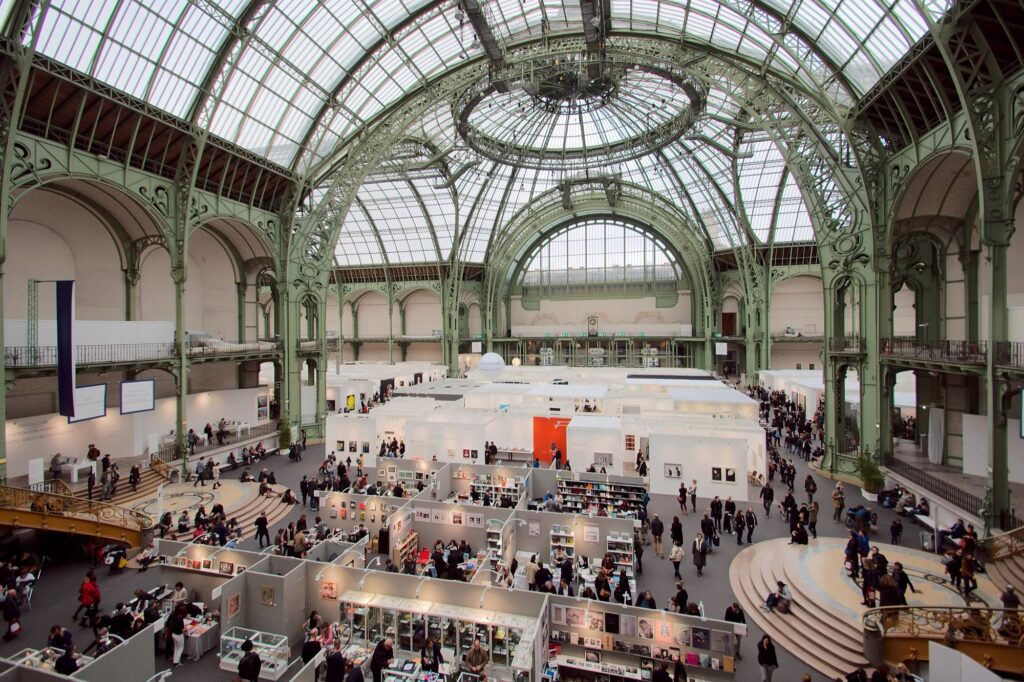
On 13 November, at Paris Photo in the Grand Palais, the Paris Photo–Aperture PhotoBook Awards named Passports, 2012–2025 by Keisha Scarville, published by MACK in London, as PhotoBook of the Year.
Its starting point is one small picture: an identity photograph of Scarville’s father, taken when he was 16 in Guyana. Since 2012 she has reworked it into some 300 unique pieces. In one, the boy’s face looks out through a veil of white dots, the paper around him crowded with handwriting. Below, an elevated train crosses a brick street and a hand lifts a glittering boombox into the frame. The book is less a portrait than an account of how a document of identity travels – between homeland and diaspora, and from one generation to the next. Scarville designed it with Morgan Crowcroft-Brown.
“Scarville’s book explores how images hold histories”, said the photographer Justine Kurland, one of the five jurors.
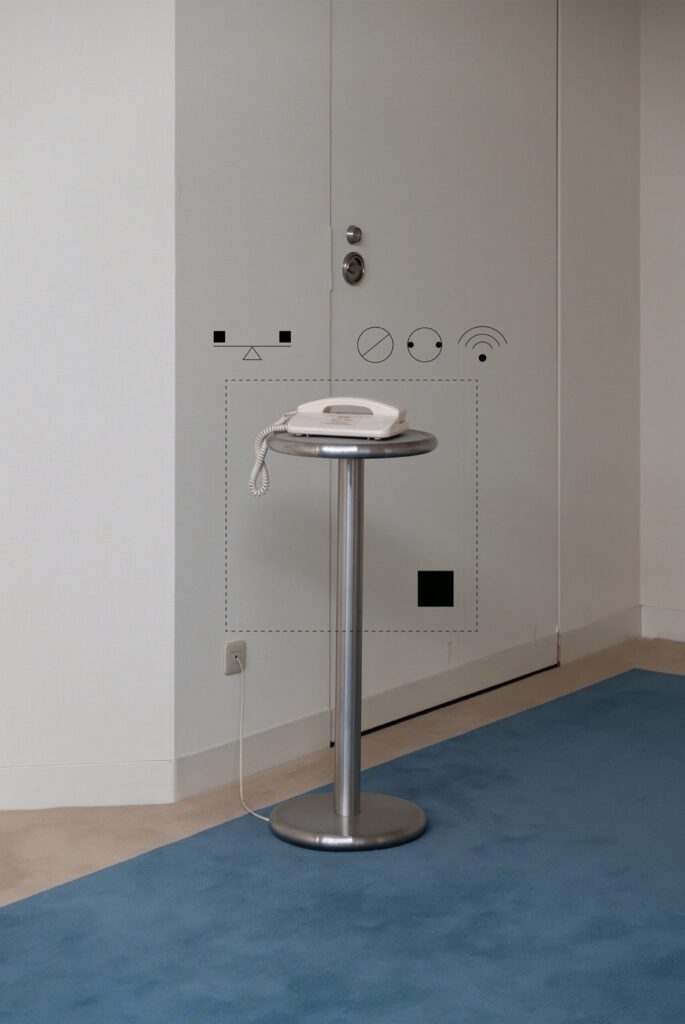
The First PhotoBook award went to Moeko Ishiguro’s Notation(s), which she designed and published herself in Tokyo. It has no conventional page numbers: readers unfold layers of paper to find photographs of everyday city things, from concrete planters to litter. “This book questions what it means to look and to see”, said the writer and curator Lou Stoppard. Anna Atkins would have recognised the method, if not the subject.
Photography Catalogue of the Year went to L Is for Look: Children’s Photobooks, edited by Anne Lacoste and Rose Durr (Spector Books, Leipzig), and the jury gave a special mention to Sara Bennett’s Looking Inside: Women with Life Sentences (Kehrer Verlag, Heidelberg). All were chosen from a shortlist of 35, drawn from a record number of entries from 56 countries.
“Scarville’s book explores how images hold histories.”
Justine Kurland, juror, Paris Photo–Aperture PhotoBook Awards 2026
The House in Göttingen
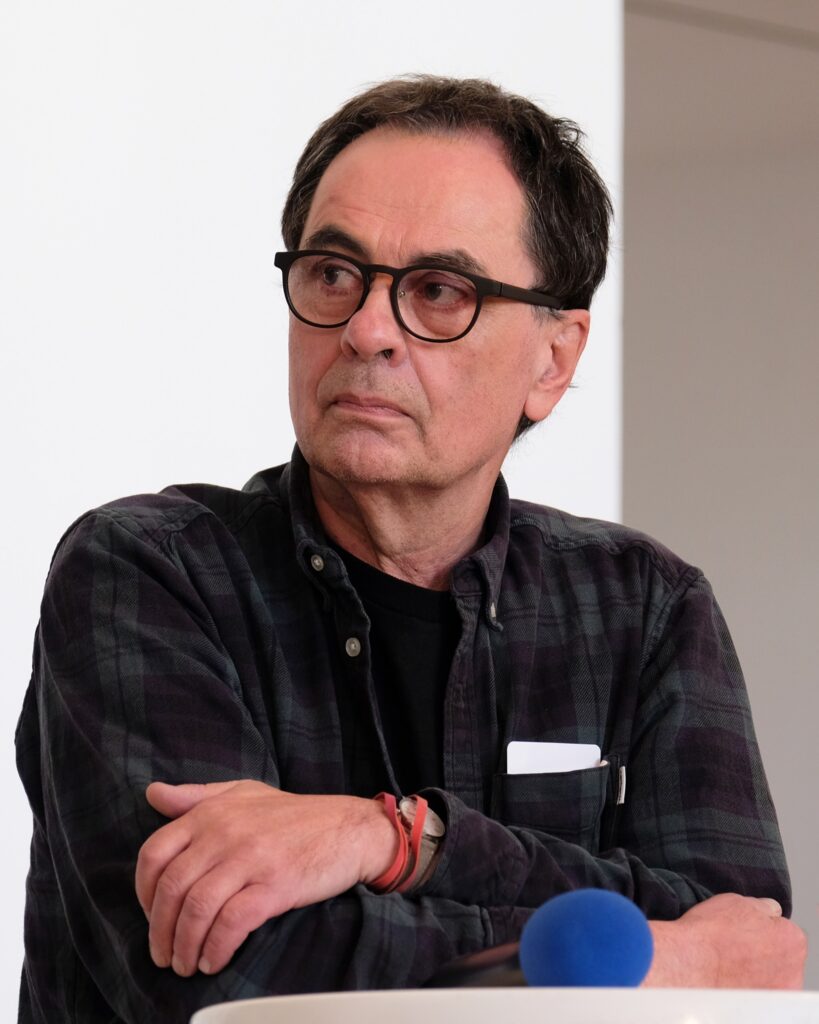
The award comes in a hard year for the best-known name in the trade. Steidl, the Göttingen publisher and printer, has twice published the PhotoBook of the Year, with Anders Petersen’s City Diary in 2012 and Dayanita Singh’s Museum Bhavan in 2017. This year’s winner has a Göttingen connection of its own. Before he founded MACK in 2010, Michael Mack was Steidl’s managing director and ran its SteidlMack imprint.
In July a creditor’s claim led the court in Göttingen to open preliminary insolvency proceedings, which were closed on 24 July once the claims had been settled. Gerhard Steidl put the firm’s difficulties down to US tariffs and to censors in China rejecting its books, and Hyperallergic reported a 50 per cent fall in international sales. Two months earlier, the Günter and Ute Grass Foundation had ended its long cooperation with the house. Steidl said in July that a Swiss investor was close to signing, but I have found no report since that the deal has gone through.
Yet Steidl was missing from the shortlist before the crisis too, with no titles there in 2024 or 2025. Since 2018 the top prize has gone every year to an independent press or to the photographer themselves. Sohrab Hura’s self-published The Coast won in 2019, Jordan Édition of Jakarta in 2021, and Loose Joints, based in Marseille and London, has taken the prize three times in four years.
A Map of Small Presses
Among the books on this year’s shortlist are titles from Marseille, Ghent, Athens, Eindhoven, Leipzig, Melbourne and Ningbo, and two were self-published, one in Tokyo and one in London. Yufan Lu’s Make Me Beautiful carries the names of four publishers in Mexico City, Barcelona and Madrid, and Sohrab Hura, the self-publishing winner of 2019, is back with Snow, published by MACK.
Ningbo, the port city south of Shanghai, has two books on the list, Ma Hailun’s Üruklyn and Zhu Mo’s Undercurrents. Both come from Jiazazhi, the press Yuan Di runs there, the second under its JZZP imprint. In the same year that Gerhard Steidl blamed censors in China for turning his books away, an international jury has placed two books from a Chinese press among the best of the year.
What a Book Costs
From the publishing side, none of this surprises me. A photobook is an expensive object, and the paper, proofs, printing, binding and freight all have to be paid for long before a single copy sells. A large house can spread those costs across a long list, and Steidl also carries the cost of its own printing works, whereas a small press bears them one book at a time, through co-editions, pre-orders and fairs.
This week’s Paris Photo is one of the largest of those fairs. Its Editions sector holds 43 publishers and booksellers, among them Loose Joints, MACK, Spector Books, Chose Commune and TBW Books. Steidl is not on the list.
I would not write off the great house, but the photobook has always moved between the two models it started with, Atkins’s book made by hand for a few readers and Talbot’s book made to be sold. What has changed is where the energy sits – this year with an independent house in London, a self-publisher in Tokyo and a small press in Ningbo, as much as in Göttingen.
Images: Keisha Scarville, Passports, courtesy the artist and MACK. Moeko Ishiguro, Notation(s), courtesy the artist. Anna Atkins, Photographs of British Algae, The Metropolitan Museum of Art, public domain. William Henry Fox Talbot, The Pencil of Nature, public domain, via Wikimedia Commons. Paris Photo 2016, photo Frédéric Bisson via Wikimedia Commons (CC BY 2.0). Gerhard Steidl, photo Kaethe17 via Wikimedia Commons (CC BY-SA 4.0).
Get new Journal articles by email: join the Artworld mailing list.